
Home › Technology
Fuji technology, explained
Fuji's value is in the technology, and the packet spells it out in a code most people cannot read. This page explains what the differences are and why they matter, what the ring is made of, what the frame is made of and why it leans, how tops and seats are sized, in plain English.
Every rod is a blank with parts on it. The blank sets the action; the parts decide how the line runs, how much the tip weighs, whether a cast tangles and whether the rod is still sound in five years of salt. Fuji Kogyo has made those parts since the 1950s and most of the rods on a New Zealand shop wall are built on them.
Start with the code. Once you can read it, every section below is a letter in it.
Start here
How to read a Fuji code
Every Fuji guide, top and seat has a code, and the code is a description. Read it left to right.
A guide or tip top code has four parts: the frame material or finish, the frame family, the ring material, and a G for a running guide or a T for a tip top. Then the size.
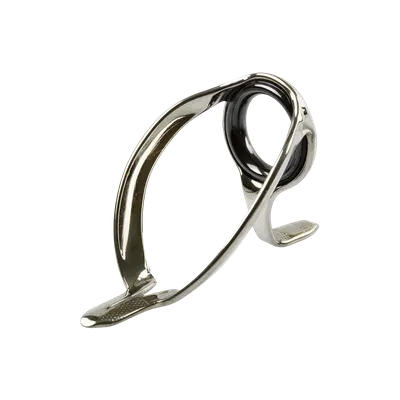
- TKWTG 16Titanium · KW · Torzite · Guide · size 16
- A titanium-framed KW double-foot guide with a Torzite ring, ring size 16. Fuji's lightest and most corrosion-proof running guide.
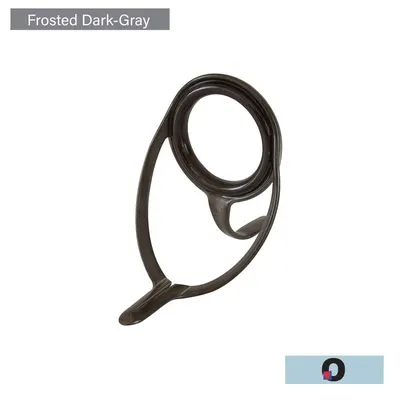
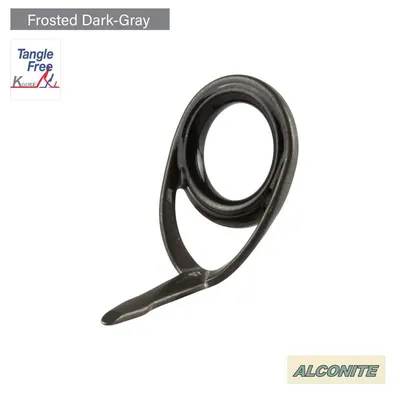
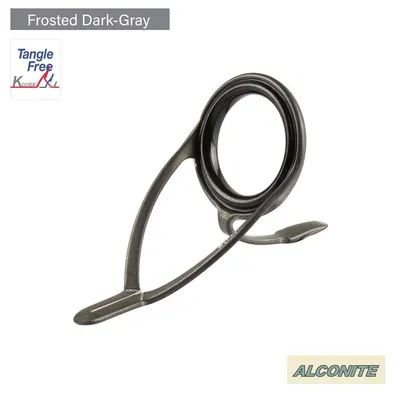
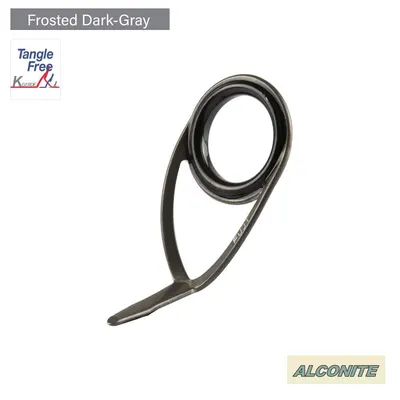
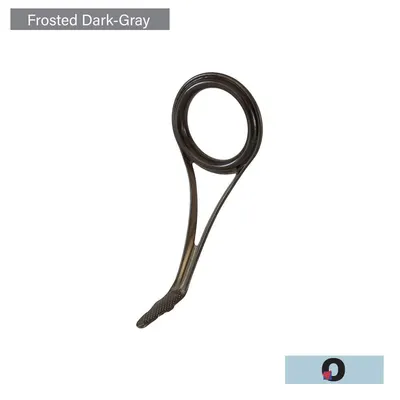
- BCKWAG 20Frosted dark-grey stainless · KW · Alconite · Guide · size 20
- The same KW frame in stainless with the BC frosted dark-grey finish and an Alconite ring. The everyday tangle-free guide on a New Zealand jig or shore rod.
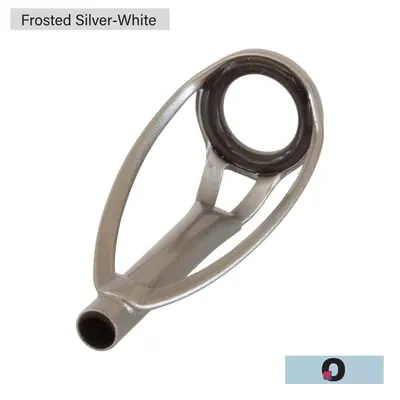
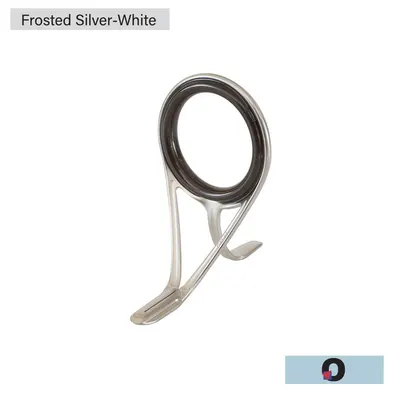
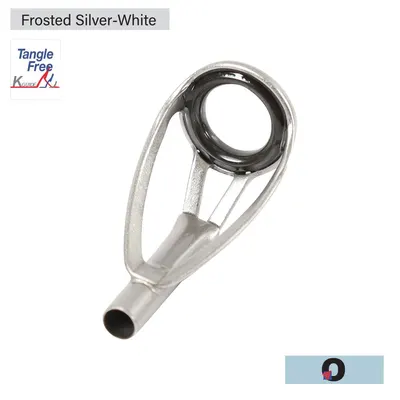
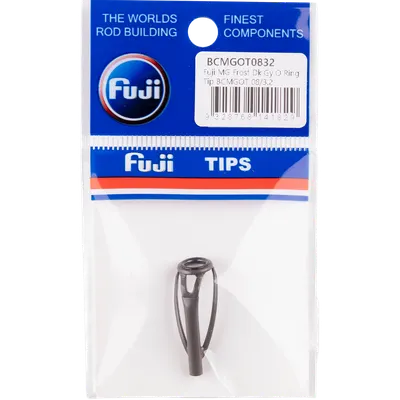
- CCMGOT 12/3.6Frosted silver-white stainless · MG · O ring · Tip top · size 12 ring, 3.6mm tube
- A standard MG tip top with the O ring, in the CC finish. The two numbers are the ring size and the inside diameter of the tube that slides over the blank.
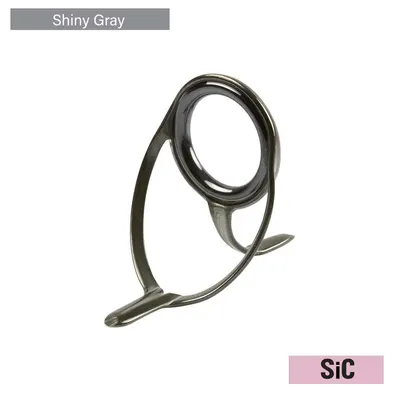
- GMLGST 6/1.6Shiny grey stainless · LG · SiC · Tip top · size 6 ring, 1.6mm tube
- A light LG top with a SiC ring for a fine spin or softbait tip.
- DPSSD 20 CCDeluxe pipe seat · 20mm inside diameter · CC hood
- Reel seats read differently: the family, then the inside diameter in millimetres, then the hood finish.
The ring letter is the one directly before the G or T. That matters on older codes, where a frame family can begin with the same letter as a ring: BNHG, Fuji's 1977 one-piece stainless 'Bonguide', is an N-type frame with a Hard ring, not a SiN ring. On this site every product page decodes its own code for you, and every card shows the decoded line.
Sizes
A guide's size is Fuji's nominal ring size, a bigger number is a bigger ring, and the product's size table gives the real inside diameter and the height off the blank. Fuji sizes run 4, 4.5, 5, 5.5, 6, 7, 8, 10, 12, 16, 20, 25, 30, 40 and 50. A modern spin rod might run 25 or 20 at the butt down to 5 or 4.5 at the tip; a jig rod stays bigger and heavier all the way.
A tip top is sized twice: ring size, then tube inside diameter in millimetres. A 12/3.6 has a size-12 ring on a tube that fits a blank tip 3.6mm across. Measure the blank with callipers; if the blank falls between sizes, take the next size up and shim it. A letter after the size (BCKLAG 10H, PMGST 10H) is a frame height or a variant within the family, and the size table on the product page tells you which.
Retail single packs (a code ending -RP) are the same top carded singly for the repair counter; the product is identical.
The ring
Ring materials: Torzite, SiC, Alconite, SiN II, Fazlite and the O ring
The ring is the only part of the rod the line touches. On a long run against a drag, the line is pulled across it under load, fast, for as long as the fish runs. What the ring is made of decides how much of that becomes heat, how much friction the cast fights, and how many seasons the ring keeps its polish.
All of Fuji's current rings are ceramics, and they are graded by four things Fuji publishes for each: hardness (how well the ring resists wear from braid and grit), thermal conductivity (how quickly it carries heat away from the line), bending strength (how much impact it survives) and specific gravity (how heavy it is for its size). The table below is Fuji's own.
Fuji's published ring properties
| Torzite | SiC | SiN II | Alconite | Fazlite | O ring | |
|---|---|---|---|---|---|---|
| Code letter | T | S | N | A | F | O |
| What it is | Fuji's own ceramic, developed only for guide rings | Silicon carbide | Silicon nitride | Reinforced aluminium oxide | Fuji's newer aluminium-based ceramic | Aluminium oxide |
| Colour | Black | Carbon black | Grey | Black | Blue | Dark brown |
| Hardness (Vickers, GPa) | 13 to 15 | 22 to 24 | 13 to 15 | 13 to 15 | 14 | 12 to 14 |
| Thermal conductivity (W/m·K) | 27 | 60 | 20 | 11 | 17 | 13 |
| Bending strength (MPa) | 1,020 | 540 | 610 | 440 | 420 | 300 |
| Specific gravity | 3.3 | 3.2 | 3.2 | 4.2 | 3.8 | 3.8 |
Figures as published by Fuji on its models-and-properties chart and its Fazlite chart; diamond, for reference, is 60 GPa and 138 W/m·K. Higher is better in every row except specific gravity.
Torzite (T)
The lightest and smoothest ring Fuji makes, and it goes only on titanium frames. Torzite is a ceramic Fuji developed in 2013 specifically for guide rings. Its bending strength is about twice SiC's, which is what lets the ring be made thin: Fuji quotes the ring at roughly 40% lighter than a SiC ring of the same size, with an inside diameter about 15% larger. The cross-section is a broad, gentle curve rather than a sharp one, so the line touches the ring over about twice the length it would on SiC and the pressure at any point is halved; with the polish Fuji gives it, the friction is a fraction of SiC's. Two practical results: the line runs cooler and lasts longer, and a rod can be built with one size smaller ring at each position below size 12, Fuji puts the saving on a nine-foot K·R spin layout at 20 to 30 percent of the guide weight against the same layout in SiC. Every Torzite guide is laser-marked, and Fuji fits Torzite only to titanium frames.
SiC (S)
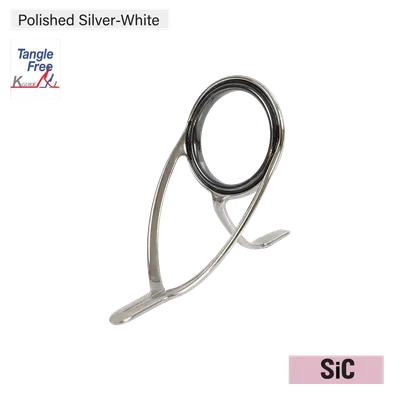
The hardest ring, and the one that sheds heat fastest. Silicon carbide has been Fuji's high-performance ring since 1981. It is the hardest of the six and carries heat away from the line more than twice as fast as the next best, which is why it has been the ring on serious game, jig and casting rods for forty years. It is slightly heavier for its size than Torzite and its ring wall is thicker, so at the same nominal size the hole is a little smaller. On stainless frames it comes in the polished (P) and shiny-grey (GM) finishes; on titanium as TKWSG, TKLSG, TKTSG and TKGST.
Alconite (A)
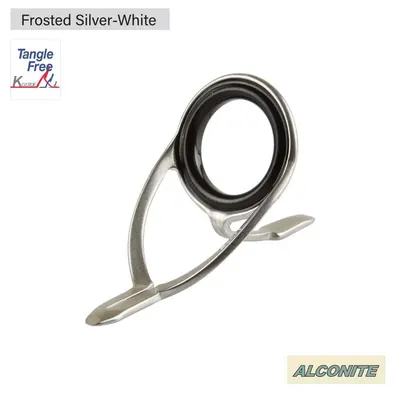
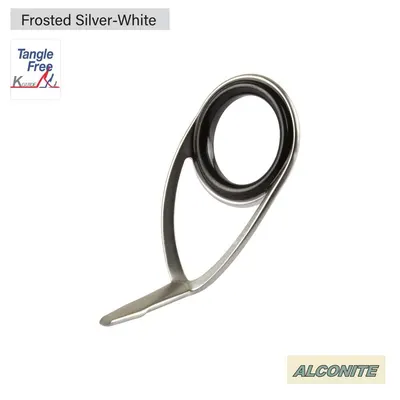
The everyday ring on most New Zealand jig, shore and surf rods. Alconite is a reinforced aluminium oxide: as hard as Torzite and SiN II, and a clear step up from the plain O ring in strength. It does not conduct heat like SiC, but for the lines and drags most rods see it is a very good ring at a fraction of the price. It is the ring on the BC and CC frosted-finish K-Series guides, BCKWAG, CCKLAG and their relatives, which are the tangle-free guides most New Zealand rod builders specify.
SiN II (N)
A grey silicon-nitride ring, between Alconite and SiC. Harder-wearing than the O ring, better at moving heat than Alconite and stronger in bending than SiC, SiN II is the ring on Fuji's HB boat guides in the shiny-grey finish (GMHBNG) and, on the past-model side, the chrome CHBNG. A good ring for a boat rod that sees heavy braid.
Fazlite (F)
Fuji's newest ring, blue, aimed at value. Fazlite, the name is Fuji, azure, light, is an aluminium-based ceramic that matches Alconite on hardness, sits just under it on strength and above it on heat. It is blue, and it goes on the frosted CC and BC finishes. Monster Distribution does not currently bring Fazlite guides into New Zealand; it is here so the packet makes sense if you meet one.
O ring (O)
The plain aluminium-oxide ring: the value option. The dark-brown O ring is Fuji's basic ceramic, the ring on the MG and LG tip tops and the LY, LC, MN and HN guides in the frosted finishes. It is the least hard of the six and the weakest in bending, but it is still a ceramic ring made and fitted by Fuji, and on a rod that will not see heavy braid or long runs it is a perfectly sound choice, and the cheapest way to replace a broken top.
Older rings still in the range
Fuji's superseded rings turn up on the past-model guides Monster Distribution still holds for repairs. Hardloy (coded L in the older codes: BNLG, BULT, CLRLG) and the Hard ring (H: BNHG, CRHG, BRHT) are Fuji's earlier aluminium-oxide rings; Gold Cermet (GG: T1SVGG) was a metal-ceramic ring on titanium frames. When you are matching a set on an older rod, these are the right parts.
Which ring should I buy?
- Building a light, high-end rod where tip weight and casting matter: Torzite on titanium.
- Heavy braid, long runs, jig and game rods: SiC.
- A jig, shore or surf rod that needs to be good and not exotic: Alconite in the K-Series frames.
- A repair on an ordinary rod, or a top that will be replaced again: the O ring.
- Matching an existing set: the same ring and finish as the guides beside it, the code on the packet tells you.
Ring properties and the Torzite figures are Fuji's, from fujitackle.it/en (Models & Properties, Fazlite and Torzite pages); the buying advice is Monster Distribution's.
In the range: ring materials: torzite, sic, alconite, sin ii, fazlite and the o ring
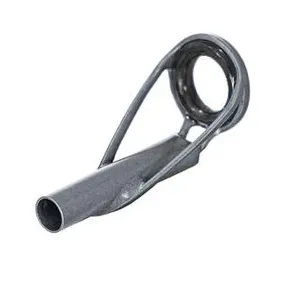
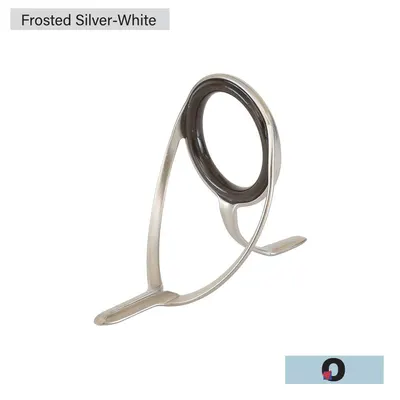
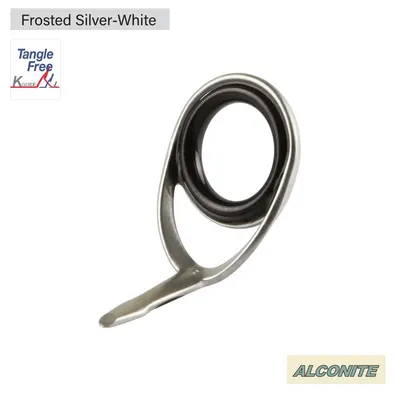
The frame
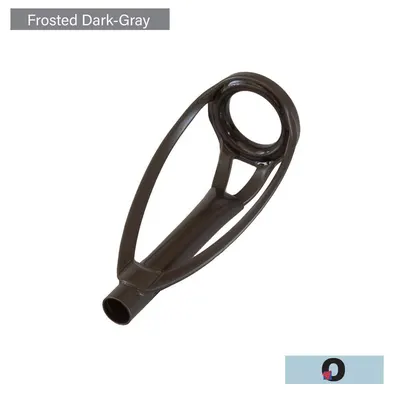
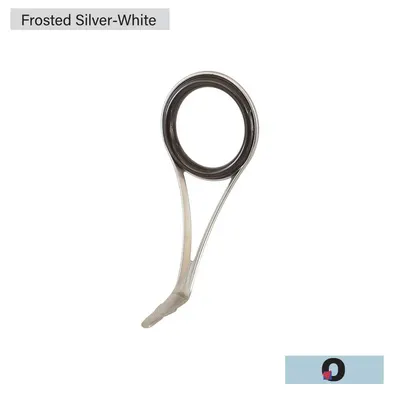
Frame materials and finishes: titanium, stainless, and P, CC, BC, GM
The frame holds the ring to the rod. Its alloy decides how much the guide weighs and how it stands up to salt, and its finish is the first letter or two of the code.
Titanium (T, T2)
Lighter than stainless, and it does not rust. Fuji introduced the titanium frame in 1985. It is much lighter than the same frame in stainless, it will not corrode in salt water, and it flexes rather than taking a set when a guide is knocked. It is the frame on every Torzite guide and on Fuji's titanium SiC guides. The cost is the cost: a titanium guide set is several times the price of the same set in stainless, which is why titanium goes on rods where weight at the tip is the point. Codes beginning T are titanium; T2 marks Fuji's newer titanium series, which Monster Distribution lists as Titanium 2 (T2KWTG, T2KTTG, T2KGTT).
Stainless steel
Strong, affordable, and finished four ways. Most Fuji guides are stainless. Fuji's stainless frames are the one-piece stainless frame it introduced in 1977, and are finished to protect them and to match the ring. The finish is the code's first letter or two, and Fuji pairs each finish with particular rings:
- PPolished stainless, silver-white
- The bright polished frame, used with SiC rings: PKWSG, PHBSG, PMNSG, PMGST, PLGST.
- CCFrosted silver-white
- A matte pale finish used with Alconite, Fazlite and O rings: CCKWAG, CCKLAG, CCMGOT and their relatives.
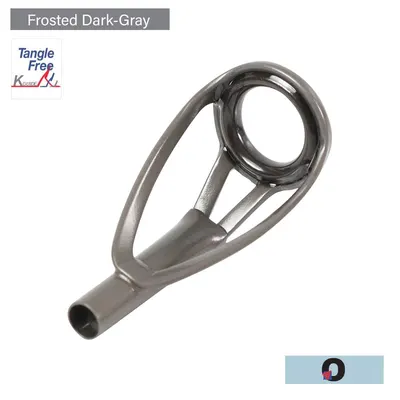
- BCFrosted dark-grey
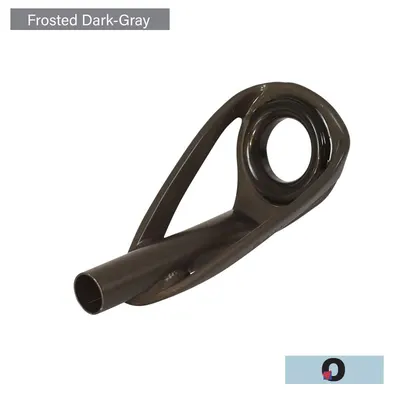
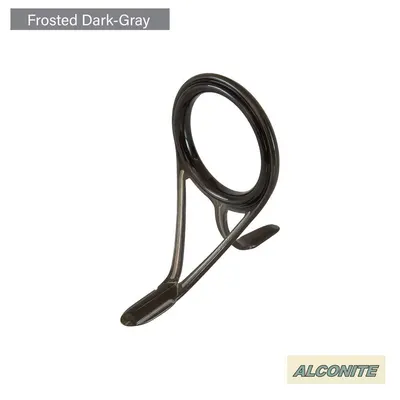
- The same matte finish in dark grey, again with Alconite, Fazlite and O rings: BCKWAG, BCKLAG, BCMGOT. On a dark blank it disappears, which is why so many New Zealand jig rods carry it.
- GMShiny grey (gunmetal)
- A gloss grey finish used with SiC and SiN II rings: GMKWSG, GMHBSG, GMHBNG, GMLGST, GMMNST.
So a builder choosing a finish is also choosing a ring: if you want SiC on a stainless frame you are choosing between P and GM; if you want the frosted dark-grey look you are getting Alconite or the O ring.
Older finishes
Past-model guides carry Fuji's older finishes, black (codes beginning B other than BC), chrome (codes beginning C other than CC) and gunsmoke, and are here for matching sets on rods built with them.
Why the frame matters as much as the ring
On a spin rod the tip section may carry five or six guides plus the top. Their combined weight is what the blank has to move on every cast and every bite, and it sits at the end of the lever, where it counts most. That is why a lighter frame in a smaller size changes how a rod feels more than any other single choice a builder makes, and why Fuji's K·R Concept, in the next section, is about making guides smaller as much as making them tangle-free.
Frame finishes and their ring pairings are Fuji's, from the 'Colors of the frames' chart on fujitackle.it/en; the titanium date is from Fuji Kogyo's history.
In the range: frame materials and finishes: titanium, stainless, and p, cc, bc, gm
The shape
The K-Series and the K·R Concept
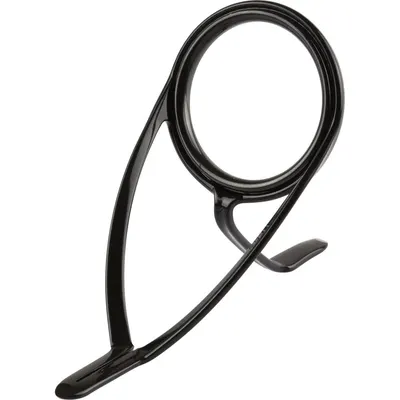
Fuji's K-Series guides, KW, KL, KT, KB and the KG top, are the frames that lean. A loop of braid thrown over one on a cast slides off the sloping frame instead of pulling tight into a knot. Fuji calls it automatic un-entanglement; a jig fisherman calls it not losing a $30 jig.
Where it comes from
In 1995 Fuji published its New Guide Concept: the idea that a rod performs best with fewer, smaller, correctly placed guides, and that the guides on the tip section in particular should be small and light. It re-examined how many guides a rod needs, their sizes, their heights and their spacing. In 2009 it launched the K guide, the first frame that actively sheds a tangle, and the K·R Concept, K-Series plus Revolution, is the New Guide Concept rebuilt around it.
What the K frame does
The frame is angled so a wrap of line cannot hold. When braid is cast, the line comes off a spinning reel in a spiral and can throw a loop over a guide. On a conventional upright frame the loop drops behind the ring and the next pull tightens it. On a K frame the whole frame slopes forward and the ring sits inside a shape with no edge for the loop to catch on, so the loop slides up and off. The same shape works against tangles at the landing end, when a slack line is being wound in. Fuji makes the geometry in every frame family a rod needs: the KW double-foot for the butt and belly, the KL with its high frame, the single-foot KT and KB for the tip section, and the KG tip top.
The three-step choke
The K·R Concept is also a layout. Line comes off a spinning reel in a wide spiral, and the guides nearest the reel have to gather it down to a straight run before it reaches the small guides at the tip. Fuji does that with three 'choke' guides, tall KL frames in decreasing size, after which the line runs straight and every remaining guide can be small and the same size. Smaller guides mean less weight on the tip, and weight on the tip is what the blank has to move on every cast and every bite. The result is a rod that casts further, feels lighter in the hand and shows bites more clearly, on the same blank.
Which K frame goes where
- KWDouble-foot, butt and belly guides
- The workhorse: two feet, a strong bridge, the tangle-free slope. On a jig or boat rod KW is used the whole way up; on a spin rod it is the first few guides. BCKWAG, CCKWAG, GMKWSG, PKWSG, TKWSG, TKWTG, T2KWTG.
- KLSingle-foot high frame, the choke guides
- A tall, light frame whose height letter (H, M, L) sets how far the ring stands off the blank. KL-H is the first choke guide on a spin rod, where the line spiral is widest. BCKLAG, CCKLAG, TKLSG, TKLTG.
- KTSingle-foot, the tip section
- The small running guides from the last choke to the tip. Single foot, one wrap, minimal weight. BCKTAG, CCKTAG, TKTSG, TKTTG, T2KTTG.
- KBSingle-foot, a braced alternative for the tip section
- A second single-foot K frame in the small sizes, an alternative to the KT. KBSG.
- KGThe K-Series tip top
- The top that matches a K layout, with a sloped frame so the last guide on the rod sheds line the same way. TKGST, TKGTT, T2KGTT.
On what rods
Fuji recommends the K·R layout for spinning rods casting heavy rigs, for heavy salt water, for boat rods, and for any rod fishing thick line or a big leader knot, which describes most New Zealand jig, softbait, stickbait and surf rods. It is less important on a light freshwater rod fishing fine mono, where a conventional layout tangles rarely anyway.
The K-Series is the geometry; the ring and the frame material are separate choices. A KW guide comes with an Alconite ring in the frosted stainless finishes, a SiC ring in polished or shiny-grey stainless or titanium, and a Torzite ring in titanium.
The New Guide Concept, the K·R Concept, the three-step choke and the weight figures are Fuji's, from fujitackle.it/en/kr-concept.html and Fuji Kogyo's history; the rod-type guidance is Fuji's recommendation list, with New Zealand examples added.
In the range: the k-series and the k·r concept
Guides
Guide frames: which family goes where
Beyond the K-Series, Fuji makes running guides in a dozen frame families, and the family tells you what the guide is for, how many feet it has, how heavy its bridge is, and how high the ring stands off the blank.
Double foot or single foot
Two feet for load, one foot for weight. A double-foot guide is wrapped at both ends and the frame forms a bridge over the blank. It resists twisting under heavy drag and survives being knocked on a boat rail, so it goes on the butt and belly of jig, boat, game and surf rods, and often all the way up. A single-foot guide is wrapped once, weighs less, and lets the tip of the blank flex more freely; it goes on the tip section of spin and casting rods, and the whole way up light rods. Fuji's KW, MN, HB and LSV frames are double-foot; KL, KT, KB, LY and LV are single-foot.
The families Monster Distribution carries
- MNThe classic heavy double-foot
- Fuji's long-standing heavy-duty frame: a deep bridge that holds the ring under braid and drag. Used on boat, jig and game rods in all sizes. BCMNOG, CCMNOG, GMMNSG, PMNSG.
- HBHeavy boat guide
- A heavy double-foot frame for boat rods, heavy braid, rod holders, gaffs and gunwales. Available with SiC and SiN II rings. GMHBSG, GMHBNG, PHBSG, CHBNG.
- HNHeavy frame with the O ring
- A heavy frame carrying the O ring in the frosted finishes, for a strong boat or jig rod built to a price. BCHNOG, CCHNOG.
- LCLow-profile casting guide
- Fuji's LC series of 2000 introduced the inclined frame and the tall, small-diameter choke layout that the K·R Concept later built on. A low, light frame for casting rods. BCLCOG, CCLCAG, LCSG.
- LSVLight double-foot
- A light two-foot frame for the running section of a spin rod where a single foot is not wanted. BCLSVAG, CCLSVOG.
- SV / LV / LYLight single-foot frames
- Fuji's single-foot running guides for spin and casting rods: the SV Spinderguide of 1982, the LV Lightspeedguide of 1983 and the LY, in sizes from 5.5 up to 30. BSVOG, SVSG, LVSG, LYOG, BCLYOG, CCLYOG.
Matching a set
Guides are bought singly, so a set is whatever a builder or a repairer chooses. Two rules keep a set right. First, keep the family and finish the same along the rod, a BC frosted frame among CC ones looks wrong and a K frame among upright ones works differently. Second, size down towards the tip in steps: on a modern spin rod the sizes might run 25-16-10-8-6-5.5-5.5-5.5 with a size-5.5 top, on a jig rod 16-12-10-10-8-8 with a 12/3.6 top. The product page for each guide lists the sizes Monster Distribution brings in and the NZ RRP of each.
Past models
Fuji retires frames as it introduces new ones, and Monster Distribution keeps a stock of the retired ones because rods built with them are still fishing. The DB oval-ring boat guide of 1998, the R-frame game guides, the N-type Bonguide of 1977 and the folding PWF guide are all in the range for that reason. They are grouped as Past models on the Rod Guides page.
Family dates are from Fuji Kogyo's history; which families are single- or double-foot is as Fuji and its retailers state per product; the layout examples are typical New Zealand builds and are a starting point, not a specification.
In the range: guide frames: which family goes where
Rod tips
Rod tips: reading 12/3.6 and choosing a top
The tip top is the guide on the very end of the rod, and the most replaced part in all of fishing. It is sized twice, and the second number is the one people get wrong.
The two numbers
Ring size, then tube size. A top's code ends in two numbers: 12/3.6 means a size-12 ring on a tube whose inside diameter is 3.6 millimetres. The ring size is chosen to match the last running guide. The tube size has to match the tip of the blank, measure it with callipers, at the very end, and buy that size. If the blank falls between sizes, take the next size up and shim with a turn of thread; a tube that is too small will not go on and a tube forced on will split the blank. Fuji makes each family in tube sizes from about 0.8mm up to 8mm.
The families
- MGThe standard top
- Fuji's everyday tip top for spin and casting rods: a compact frame, ring sizes 5.5 to 16, tubes from 1.6 to 4.5mm. BCMGOT and CCMGOT with the O ring; PMGST with SiC. This is the top a repair counter sells most of, and the -RP retail single packs are the same part carded singly.
- LGThe light top
- A smaller, lighter frame for the fine tips of spin, softbait and light casting rods, ring sizes 4.5 to 8. BCLGOT, CCLGOT, BCLGAT, GMLGST, PLGST; in titanium and Torzite as TLGTT.
- FThe loop top
- A single wire loop with the ring in it, the lightest top there is, for fly rods and very fine tips. BCFAT, CCFAT, FST. Fuji's fly tips and the braced fly tip belong with it.
- KGThe K-Series top
- The sloped tangle-free top that matches a K·R layout. TKGST with SiC, TKGTT and T2KGTT with Torzite, all titanium.
- FCTitanium Torzite top for light rods
- A small titanium top with a Torzite ring: TFCTT.
- MNThe heavy top
- The tip-top version of the MN frame, a braced frame and a big tube for boat, jig and game rods, ring sizes 8 to 16, tubes to 5mm. BCMNAT, CCMNAT, GMMNST, MNST; in titanium and Torzite as the flanged TMNTT.
- HGHeavy game top
- A heavy top with a large tube, sizes 12 and up, for game rods. BCHGOT, CCHGOT.
- UXHeavy-duty top
- Fuji's strongest stainless top, for the big tubes of jig and game blanks. BCUXOT, BUXOT.
Flanged tops
A size with an F after the ring number, 12F/4.5, 16F/7.5, has a flange, a collar at the mouth of the tube that butts against the end of the blank. Flanged tops are game-rod tops: the flange takes the load of a fish pulling straight down the rod so the tube is not driven onto the blank. The past-model gunsmoke, chrome and black flanged tops are in the range for repairs to older game rods.
Fitting a top
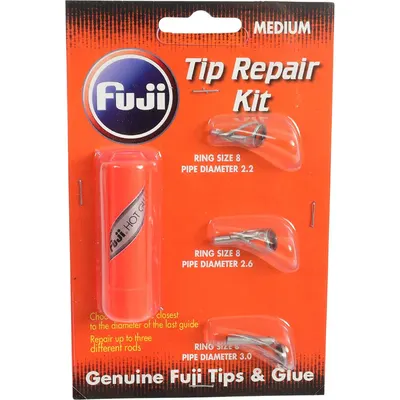
A tip top is glued on, not wrapped. Fuji's hot-melt glue is the traditional way: warm the stick, wipe the blank tip, push the top on straight, line the ring up with the guides and let it cool. It can be warmed and removed again, which is why repairers use it. The EZ repair kits on this site bundle a set of tops with the glue for exactly that job.
Family sizes are from the size tables on the product pages, which are Fuji's; the fitting method is standard practice.
In the range: rod tips: reading 12/3.6 and choosing a top
Reel seats
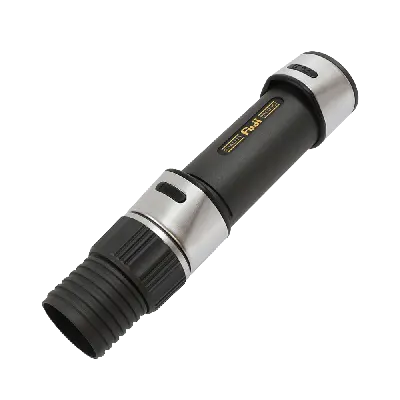
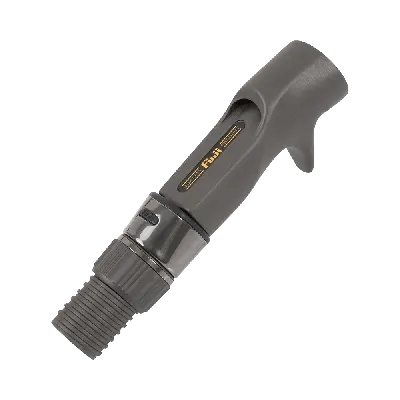
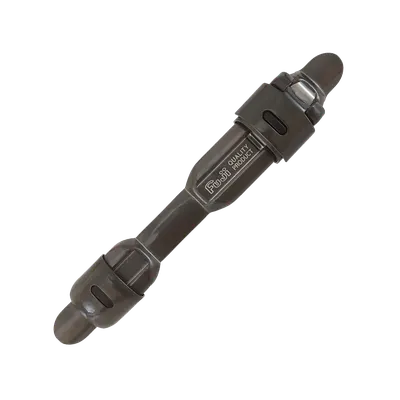
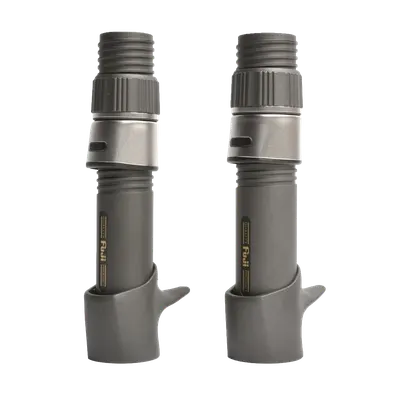
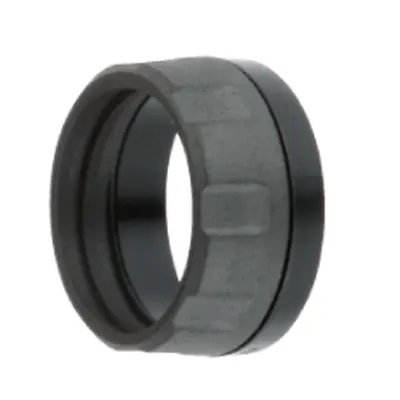
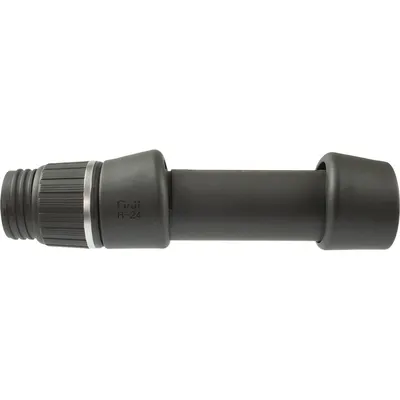
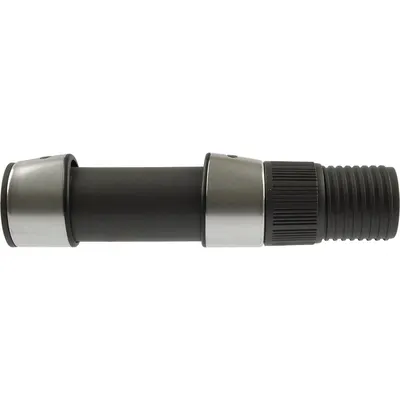
Reel seats: pipe, trigger, palm and plate
The reel seat is the one part of a rod the angler holds all day, and the one that decides whether the reel stays put. Fuji has made them since 1951, and its resin pipe seat of 1979 is why a modern seat is light, warm to hold and does not work loose.
Sizing
The size is the inside diameter, in millimetres. A DPSSD 20 has a 20mm bore: it slides over a blank a little under 20mm across at that point and is glued on, often over a shim of tape or arbor to centre it. Sizes run 16, 17, 18, 20, 22, 24 and 26. Measure the blank where the seat will sit, and note that the reel foot size is separate, most Fuji seats take any normal spinning or overhead reel foot in their size range.
The families
- DPS / DPSSDDeluxe pipe seat, spinning rods
- Fuji's standard graphite pipe seat for spinning rods, with a ribbed bore for a strong glue bond and a threaded hood nut that locks the reel. DPSSD is the deluxe version. The seat on most New Zealand spin and softbait builds.
- DPS-HHeavy pipe seat
- The same design in a heavier build for big spinning reels on jig and popping rods: sized DPSH 22-20, 24-22 and 26-24.
- DPS-MPipe seat with the M-type hood
- A DPS variant with Fuji's M-type hooded nut.
- TCS / TCSSDTrigger seat, overhead and baitcast rods
- A seat with a trigger under the reel for overhead and baitcasting rods; the trigger hooks a finger so the rod can be held with the reel on top. TCSSD is the deluxe version.
- T-DPSSD / TDPS / DTPSTrigger versions of the pipe seat
- The DPS body with a trigger, for builders who want the pipe seat's bore and hood on an overhead rod.
- PSSPalm seat
- A slimmer spinning seat that fills the hand, the PSS-LD 20.
- SK (SKTS)Skeleton trigger seat
- A cut-away trigger seat that exposes the blank under the hand, for light baitcast rods where feel matters.
- TCH (FBCS)Titanium-hooded trigger seat
- Fuji's TCH range combines carbon and titanium, the top of the range, for a light, rigid, corrosion-proof seat on a high-end overhead rod. The FBCS-K here is the 15-13mm size.
- NS / LS (LSMX)Plate seats, game and surf rods
- The descendants of Fuji's original 1951 seat: a metal plate with a hood at each end that is bound or clamped to a heavy blank rather than glued over it, so sand washes out and the reel can be moved. For game rods, surf rods and any rod that needs the seat to be serviceable.
- FS7Bind-on seat
- A simple seat bound to the blank with thread, for rods where a pipe seat will not fit.
- Backstop lock nutFor pipe seats
- A second nut behind the hood nut of a DPS seat so it cannot back off under a heavy reel.
Hood finishes
The letters after a seat's size are the finish of its hood and nut, and they match Fuji's guide finishes: CC is frosted silver-white, GM is shiny grey, BC is frosted dark-grey. A CC seat suits a rod built with CC guides. A builder matching a seat to a set of BC guides on a dark blank wants the BC hood.
Seat families and sizes are from Fuji's and its retailers' product listings; the hood-finish codes are from Fuji's reel-seat finish chart on fujitackle.it/en; the 1951 and 1979 dates are from Fuji Kogyo's history.
In the range: reel seats: pipe, trigger, palm and plate
Building and repair
Thread, epoxy, the EZ system, gimbals and hook keepers
The rest of the range is what puts the parts on the rod and finishes it: the thread the guides are wrapped with, the epoxy that seals the wraps, the kits that let a shop fix a rod over the counter, and the fittings on the butt.
Thread
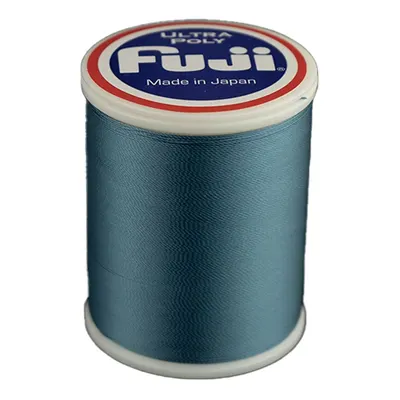
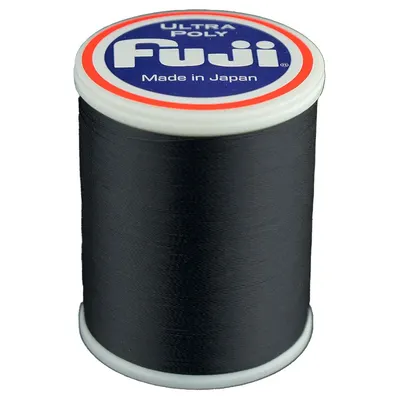
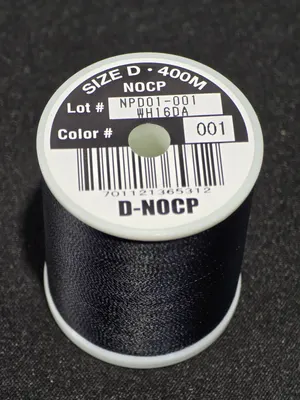
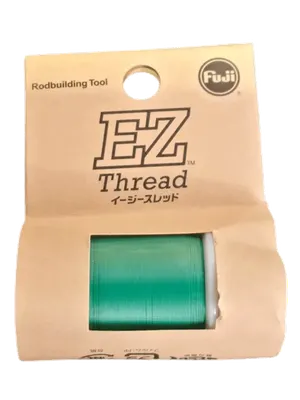
Guides are held on by thread wrapped tight over the feet and sealed with epoxy. Fuji's NOCP nylon thread comes in two grades: A is the fine thread for wrapping guides on light and medium rods, D is the heavier thread for big guides, for underwraps and for decorative work. NOCP thread holds its colour under epoxy without a separate colour preserver. The metallic threads are for trim bands, and the Ultra Poly range is a polyester thread that stays colour-true. EZ thread is thread packaged for a one-guide repair.
Epoxy
Fuji's Epo is a two-part finishing epoxy, mixed two to one, brushed over the wraps and turned while it cures so it levels. A rod rotisserie, a slow motor that turns the rod, is how a builder gets a glass-smooth finish, and Fuji makes one.
The EZ system
EZ is Fuji's over-the-counter repair range: a set of replacement tops in the common tube sizes with a stick of hot-melt glue, a coating kit with the epoxy and a brush, thread in a repair pack, and hook keepers that fit without a wrap. It is built for the shop that gets a rod handed over the counter with a snapped tip, and for the angler who would rather fix it than post it.
Gimbals and butt caps
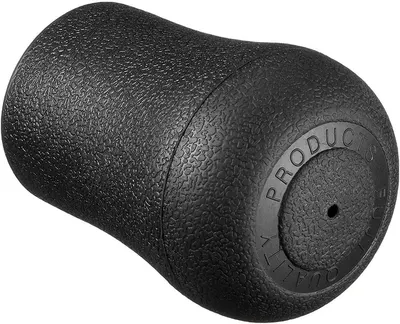
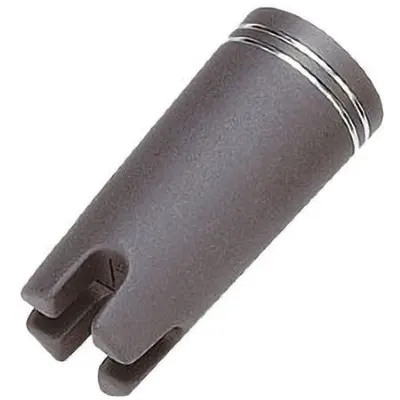
A gimbal is the slotted fitting on the butt of a game or jig rod that locks into a belt or a rod holder so the rod cannot turn under load; Fuji's GC is the standard, the GRC a soft version. A butt cap, BRC, is the rubber end on a rod that will be planted against the body or the deck, and the gimbal covers and protectors go over a gimbal when it is not in a belt. Sizes are the bore, in millimetres, as with a reel seat.
Hook keepers
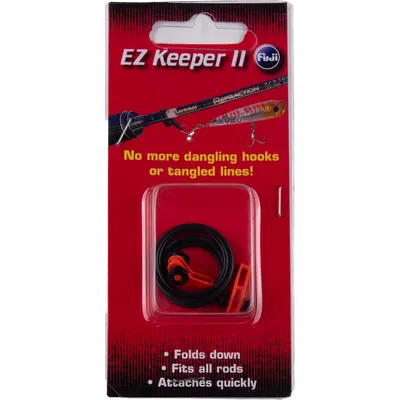
A hook keeper is a small ring or loop above the grip to park the hook when the rod is not fishing, so it is not in a guide ring or the cork. Fuji's folding BHKM keeper folds flat when not in use; the E-series keepers are ring clips in sizes for 5 to 9mm and 9 to 16mm blanks; the EZ keepers fit without a wrap.
Product facts are from Fuji's and its retailers' listings; the wrapping and finishing method is standard rod-building practice.
In the range: thread, epoxy, the ez system, gimbals and hook keepers
Every product page on this site decodes its own code and links back to the section that explains it, and every card shows the decoded line. If you are matching a part to a rod, the code on the packet and the tube or blank measurement are the two things to bring to the shop.
Monster Distribution supplies Fuji to tackle stores, rod builders and repair shops across New Zealand and does not sell direct. Where to buy lists the stores that do.